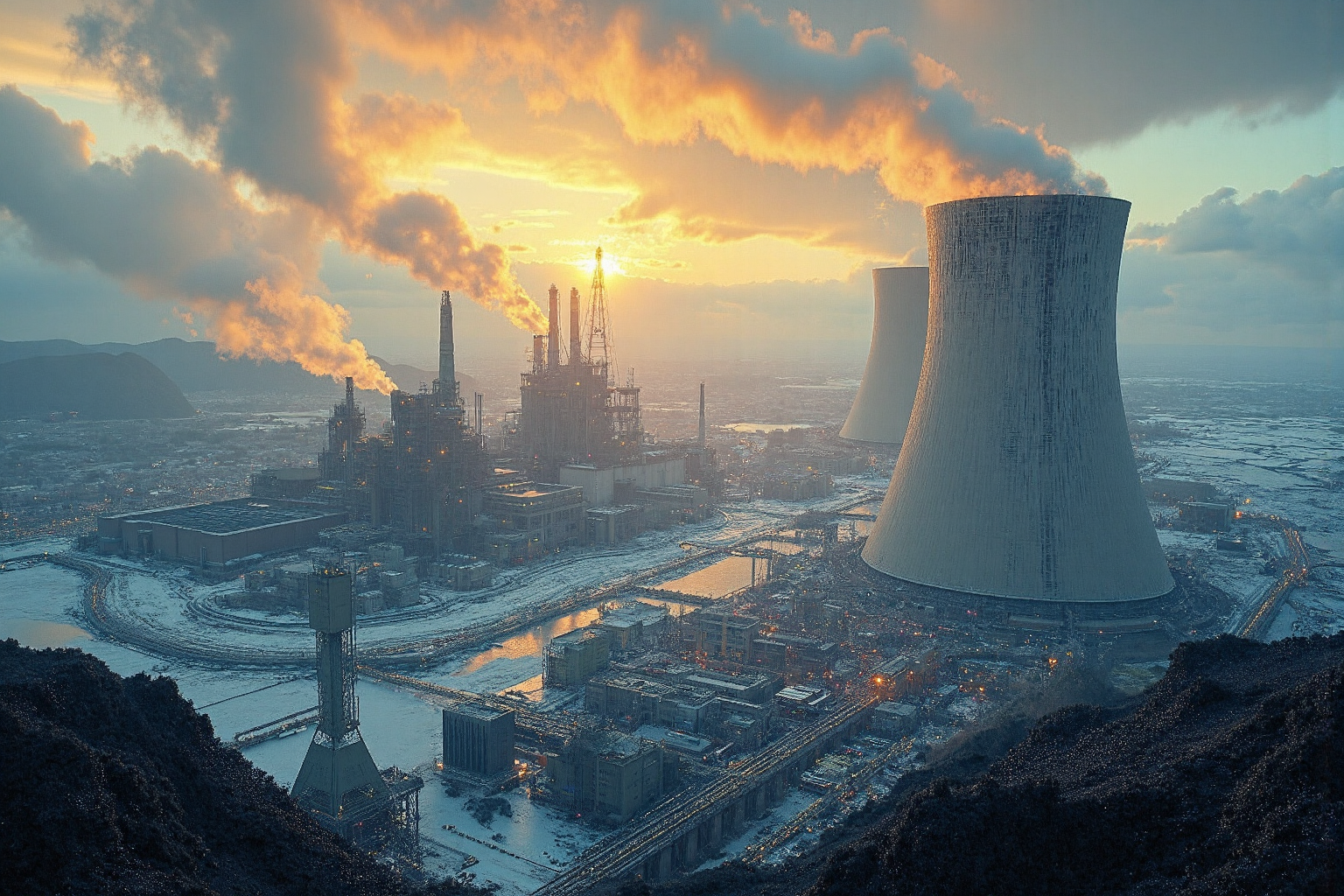
Introduction: The Promise of Carbon Capture
The urgency of the climate crisis demands immediate and impactful action. The Intergovernmental Panel on Climate Change (IPCC) has warned that exceeding 1.5 degrees Celsius of global warming will result in irreversible damage to ecosystems and human livelihoods, underscoring the critical need for rapid decarbonization. Carbon capture technologies, encompassing methods to trap CO2 emissions before they enter the atmosphere, are increasingly recognized as a pivotal tool in mitigating climate change and achieving net-zero emissions targets. These technologies offer a pathway to significantly reduce the impact of industrial processes, power generation, and even existing atmospheric CO2, paving the way for a more sustainable future. This article delves into the landscape of carbon capture technologies, examining their various methodologies, practical applications, current limitations, and future potential in the global fight against climate change.
The escalating concentration of greenhouse gases, primarily driven by human activities such as the burning of fossil fuels and deforestation, is the leading cause of global warming. As climate change intensifies, we are witnessing more frequent and severe weather events, rising sea levels, and disruptions to ecosystems. Carbon capture offers a vital solution by intercepting CO2 emissions at their source or directly from the air, preventing their release into the atmosphere. This approach, coupled with emissions reduction strategies and the transition to renewable energy sources, is essential for achieving the deep decarbonization necessary to limit global warming and safeguard the planet.
Still, from capturing emissions at power plants and industrial facilities to innovative direct air capture plants, these technologies hold the promise of significantly altering the trajectory of climate change. The development and deployment of these technologies represent a multi-faceted challenge, requiring substantial investment in research and development, infrastructure build-out, and policy frameworks that incentivize adoption.
This article provides a comprehensive overview of the current state of carbon capture, exploring the various methods employed, analyzing their effectiveness, and discussing the challenges and opportunities that lie ahead. We will examine the role of government policies and incentives in accelerating the growth of the carbon capture industry and explore the potential of next-generation technologies to revolutionize the fight against climate change.
The exploration of carbon capture methods holds significant promise for industries seeking to decarbonize their operations, offering a viable pathway to reduce their environmental footprint and contribute to a sustainable future. By understanding the potential of carbon capture, we can unlock crucial solutions in the global effort to combat climate change and build a more resilient world.
Understanding Carbon Capture Technologies
Carbon capture technologies are a key part of combating climate change by capturing CO2 emissions before they enter the atmosphere. They play a critical role in meeting global sustainability targets, breaking down into three main categories: pre-combustion capture, post-combustion capture, and direct air capture (DAC). Each method focuses on different emission sources and has its own effectiveness.
Pre-combustion capture tackles CO2 from fossil fuels before they’re burned. In IGCC plants, coal is converted into syngas, allowing CO2 to be removed before combustion. This approach is especially useful for power generation and industry, helping reduce emissions at the source.
Post-combustion capture handles emissions after fuel is burned. It’s used in industries like cement production and waste incineration, adapting to varied emission challenges. Amine-based solvents, for instance, absorb CO2 from flue gases, which can then be stored. This method is ideal for updating older power plants, cutting emissions quickly while moving toward cleaner energy.
Direct air capture (DAC) pulls CO2 directly from the air. Still developing, it has potential to remove existing atmospheric carbon. Companies like Carbon Engineering and Climeworks are testing large-scale systems, which could be vital for net-zero goals.
These methods differ in approach but share a goal: reducing human impact on climate. Innovation in this field is driven by the need for affordable, scalable solutions. Pairing capture with storage or reuse creates closed-loop systems, supporting a circular economy. Whether cutting industrial emissions or achieving negative emissions, these tools are central to protecting the planet for future generations.
Exploring Different Carbon Capture Methods
Pre-combustion carbon capture is a crucial technology in the fight against climate change, focusing on removing CO2 from fossil fuels before they are burned. This method typically involves converting the fuel into a mixture of hydrogen (H2) and carbon dioxide (CO2). The CO2 is then separated and captured, while the hydrogen can be used as a clean fuel source for power generation or other industrial processes. This method is particularly effective in large-scale industrial settings, such as power plants and refineries, offering a proactive approach to emissions reduction. For example, integrated gasification combined cycle (IGCC) plants utilize pre-combustion capture, showcasing its potential for decarbonizing the power sector. Post-combustion carbon capture, conversely, addresses emissions after fuel combustion. This method captures CO2 from the flue gases released by power plants and industrial facilities. Various technologies, including amine scrubbing, are employed to separate the CO2 from other flue gas components. The captured CO2 is then compressed and transported for storage or utilization. Post-combustion technology is adaptable to existing infrastructure, offering a pathway to retrofitting conventional power plants and reducing their carbon footprint. A notable example is the Boundary Dam Power Station in Canada, a pioneering project demonstrating the feasibility of post-combustion capture in a commercial setting.
Direct air capture (DAC) presents a groundbreaking approach, extracting CO2 directly from the ambient air. This technology utilizes specialized chemical processes to bind with CO2 present in the atmosphere. Although DAC is still a relatively nascent technology, its potential is immense, offering a way to address emissions from diffuse sources and even achieve net-negative emissions. Several companies are at the forefront of DAC innovation, developing and deploying increasingly efficient and cost-effective systems. Climeworks in Switzerland, for instance, operates a commercial DAC plant that captures CO2 from the air and converts it into useful products. Carbon Engineering, another prominent player in the DAC space, is developing large-scale DAC plants aimed at significantly reducing atmospheric CO2 levels. These diverse carbon capture technologies play a vital role in decarbonizing various sectors, contributing to sustainability and mitigating climate change. As innovation continues and costs decrease, these technologies are poised to become increasingly integral to global climate action. The development and deployment of carbon capture, utilization, and storage (CCUS) technologies are essential for achieving the ambitious emissions reduction targets set by the Paris Agreement and transitioning towards a cleaner, sustainable energy future. By integrating these methods into existing and future infrastructure, we can effectively reduce our carbon footprint and mitigate the worst impacts of climate change. The transition to a low-carbon economy requires a multifaceted approach, and carbon capture technologies offer a powerful tool in our arsenal to combat climate change and build a more sustainable world.
Effectiveness and Cost-Benefit Analysis
The effectiveness of carbon capture technologies hinges on their ability to achieve high capture rates while adapting to specific industrial contexts. Post-combustion capture in coal plants typically reaches 85-95% efficiency, whereas direct air capture (DAC) systems face lower rates due to ambient CO2 concentrations. Cement production, with its process-specific emissions, requires customized solutions, highlighting the need for technology tailored to application. Mature methods like amine-based capture demonstrate proven commercial success, while emerging approaches such as novel sorbents for DAC remain in development, necessitating further research to optimize performance. Evaluating effectiveness thus demands a balanced assessment of technological maturity, operational challenges, and environmental compatibility across diverse sectors.
Cost-benefit analysis is essential for determining the economic feasibility of carbon capture initiatives. Capital and operating expenses, energy demands, and the market value of captured CO2—such as in enhanced oil recovery or synthetic fuel production—directly impact financial outcomes. Government policies, including carbon pricing and tax incentives, can significantly enhance project viability by offsetting costs. Additionally, avoided costs from mitigating climate impacts like sea-level rise or ecosystem damage must be quantified to strengthen economic arguments. A holistic analysis integrating these factors ensures a realistic assessment of long-term financial returns versus upfront investments.
Long-term sustainability of carbon capture projects requires minimizing environmental footprints across their lifecycle. Life cycle assessments (LCAs) evaluate impacts from material sourcing to CO2 storage, emphasizing energy efficiency, water conservation, and responsible material use. Safe, permanent storage is critical to prevent leakage and ensure enduring climate benefits. These considerations underscore that carbon capture must align with broader sustainability goals, avoiding unintended ecological trade-offs while maintaining operational viability over decades.
Innovation in carbon capture technologies is driving advancements in both effectiveness and cost-efficiency. Research into advanced solvents, membrane-based separations, and improved DAC systems aims to boost capture rates while reducing energy consumption. These developments, coupled with supportive policies and growing public awareness, are accelerating deployment. As technologies mature and costs decline, carbon capture is increasingly positioned as a vital component of global climate strategies, offering scalable solutions to reduce emissions across industries.
Real-World Applications of Carbon Capture
Carbon capture technologies are rapidly moving from theoretical concepts to tangible, real-world applications, demonstrating their versatility across diverse sectors. From large-scale power plants and industrial facilities that are major sources of emissions to innovative bioenergy production and dedicated direct air capture (DAC) plants, the implementation of these technologies is becoming increasingly crucial for decarbonization efforts. A few examples of successful implementations and ongoing research, highlighting the potential of carbon capture to contribute to climate change mitigation. For example, in the power generation sector, several coal and natural gas-fired power plants have integrated post-combustion carbon capture systems, effectively capturing a significant portion of the CO2 emissions before they reach the atmosphere. These projects often utilize amine-based solvents to absorb CO2 from flue gases, which is then compressed and prepared for storage or utilization.
The captured CO2 can be transported through pipelines to geological storage sites or used in enhanced oil recovery (EOR) projects, demonstrating a practical application of carbon capture and utilization (CCUS). Beyond power generation, the industrial sector is also seeing significant advancements in carbon capture technology. Cement production, a notoriously carbon-intensive process, is exploring various methods to capture CO2 emissions from its manufacturing facilities. One notable example involves using calcium looping technology, where lime is used to capture CO2, which can then be regenerated and reused in the process. Similarly, in the steel industry, research is underway to integrate carbon capture systems into blast furnaces, aiming to significantly reduce the sector’s carbon footprint. These examples highlight the potential of carbon capture to decarbonize some of the most challenging industrial sectors, driving emissions reduction and promoting sustainability. Bioenergy with carbon capture and storage (BECCS) represents another promising application of carbon capture technologies. By capturing CO2 emissions from biomass combustion or fermentation processes and storing it permanently, BECCS can achieve net-negative emissions, effectively removing carbon from the atmosphere. Several pilot projects are underway to explore the feasibility and scalability of BECCS, with some focused on using agricultural residues or purpose-grown energy crops as feedstock. These projects are critical in demonstrating the potential of BECCS as a valuable carbon removal tool in the fight against climate change, contributing to both emissions reduction and carbon removal. Direct air capture (DAC) technology is also gaining traction as a method for extracting CO2 directly from the ambient air, regardless of the source of emissions. While still in its early stages of development, DAC offers a potentially scalable solution for carbon removal, particularly in regions where large point sources of emissions are not readily available. Companies are currently developing and testing various DAC technologies using different materials and processes, with a focus on improving efficiency and reducing costs. These DAC projects are pivotal in demonstrating the potential of carbon removal as a viable climate tech solution. Ongoing research and development efforts are focused on improving the efficiency, cost-effectiveness, and scalability of carbon capture technologies. Researchers are exploring novel materials for CO2 capture, such as metal-organic frameworks (MOFs) and advanced solvents, which promise to increase capture rates and reduce energy consumption. Innovation in process design is also crucial, with efforts to optimize existing capture methods and develop new ones. Furthermore, the development of carbon capture infrastructure, including pipelines and storage sites, is essential for the widespread deployment of these technologies. The advancements in carbon capture are not only contributing to climate change mitigation but also fostering economic growth by creating new jobs and industries. This continuous innovation is key to unlocking the full potential of carbon capture and paving the way for a sustainable future.
Challenges and Limitations
Carbon capture holds great promise for fighting climate change, but it faces real hurdles that slow its adoption. High costs are a major issue. Building and running these systems demands huge upfront investment, which many industries—especially in poorer nations—can’t afford. Some methods, like post-combustion capture, use so much energy that they end up releasing more emissions, which weakens their environmental value.
Storing captured CO2 safely is another big challenge. Options like deep underground storage in rock formations or old oil fields need precise placement and constant monitoring to avoid leaks that could harm the environment. There’s also not enough suitable space in these storage sites to scale the technology widely.
Public opinion matters too. People worry about safety risks, environmental damage from pipelines or leaks, and whether carbon capture might let fossil fuel use continue unchecked. Gaining trust requires clear communication and proof that risks are managed.
Solving these problems needs teamwork. Tech improvements must cut costs and energy use while making storage safer. Governments can help with policies like carbon taxes or tax breaks that make carbon capture more financially viable. Sharing knowledge across countries could speed up progress.
DAC, which pulls CO2 directly from the air, is getting attention as a way to hit net-zero targets. It’s unique because it can tackle emissions from sources that are hard to control. Some DAC projects are already running, but they’re still expensive and energy-heavy. Lowering these barriers will require smarter designs and scaling up production.
Carbon capture isn’t a fix-all. It works best when combined with renewable energy and efficiency upgrades. As climate goals tighten, integrating it into a broader strategy will be key to a sustainable future.
The Role of Government Policies and Incentives
Government policies and incentives are indeed pivotal in fostering the growth and widespread adoption of carbon capture technologies. Carbon pricing mechanisms, such as carbon taxes or cap-and-trade systems, create a financial disincentive for emitting greenhouse gases, thereby making carbon capture and storage (CCS) and carbon capture, utilization, and storage (CCUS) projects more economically viable. These policies effectively internalize the environmental costs of carbon emissions, driving industries to invest in cleaner technologies. For example, the European Union’s Emissions Trading System (EU ETS) has been instrumental in encouraging carbon capture initiatives across various sectors, demonstrating the potential of market-based instruments in promoting decarbonization efforts. Tax credits and subsidies represent another crucial form of government support. These financial incentives can significantly reduce the capital costs associated with deploying carbon capture facilities, making them more attractive to investors and businesses. The 45Q tax credit in the United States, for instance, provides considerable financial support for projects that capture and store or utilize carbon dioxide, encouraging innovation in the climate tech sector. Such incentives are crucial for overcoming the initial economic hurdles that often impede the deployment of new technologies, especially in the nascent stages of development. Furthermore, regulatory frameworks play a vital role in establishing clear standards and guidelines for carbon capture projects.
These frameworks can streamline the permitting process, reduce uncertainty, and ensure that projects are implemented safely and effectively. For example, regulations that mandate carbon capture for certain types of industrial facilities can create a stable market for carbon capture technology and drive further innovation. In addition to these direct financial and regulatory measures, government policies can also support research and development in carbon capture. Funding for research into advanced materials, novel capture processes, and direct air capture (DAC) technologies is essential for accelerating the development of more efficient and cost-effective solutions. Government-sponsored research programs can also help to bridge the gap between lab-scale innovation and commercial deployment, ensuring that new technologies reach the market more quickly. Moreover, international cooperation and policy harmonization are crucial for achieving global climate goals. Collaborative efforts between governments can facilitate the sharing of best practices, promote technology transfer, and create a level playing field for carbon capture initiatives. The Paris Agreement, for example, provides a framework for international cooperation on climate change mitigation, which includes the development and deployment of carbon removal technologies. A multi-faceted approach that combines carbon pricing, financial incentives, regulatory frameworks, and research support is essential for maximizing the potential of carbon capture as a critical tool in the fight against climate change. By creating a supportive policy environment, governments can drive innovation, reduce costs, and accelerate the widespread adoption of carbon capture technologies, paving the way for a more sustainable future.
The Future of Carbon Capture
The future of carbon capture holds immense promise, driven by continuous innovation and rapid advancements in technology. These advancements offer a beacon of hope in the face of the escalating climate crisis, providing tangible pathways towards decarbonization and a sustainable future. Next-generation carbon capture technologies are poised to revolutionize how we address emissions, moving beyond conventional methods to achieve greater efficiency and scalability. One exciting area of development lies in the realm of advanced solvents and sorbents, materials designed to capture CO2 with enhanced selectivity and capacity. Researchers are exploring novel materials, including metal-organic frameworks (MOFs) and ionic liquids, that offer significant improvements over traditional amine-based solvents. These innovations could drastically reduce the energy required for carbon capture, making the process more cost-effective and environmentally friendly. Another promising avenue involves integrating carbon capture with bioenergy production, a concept known as bioenergy with carbon capture and storage (BECCS). This approach involves cultivating biomass, which absorbs CO2 as it grows, then burning the biomass for energy while capturing the resulting emissions. BECCS offers the potential to achieve negative emissions, effectively removing CO2 from the atmosphere and storing it securely.
Several pilot projects are already demonstrating the feasibility of BECCS, paving the way for large-scale deployment in the coming years. Direct air capture (DAC) technology is also undergoing significant advancements, with new approaches emerging to capture CO2 directly from the ambient air. Innovations in DAC focus on improving the efficiency and affordability of capturing CO2 from dilute concentrations, leveraging advanced materials and process designs. As DAC technology matures, it could play a crucial role in addressing emissions from diffuse sources, such as transportation and agriculture, which are challenging to capture using conventional methods. The integration of artificial intelligence (AI) and machine learning is further accelerating the development of carbon capture technologies. AI algorithms can optimize capture processes, predict performance, and identify ideal locations for deployment. By harnessing the power of AI, researchers are pushing the boundaries of carbon capture, unlocking new possibilities for efficient and cost-effective emissions reduction. The successful deployment of next-generation carbon capture technologies hinges on continued research and development, supportive government policies, and strategic partnerships between industry and academia. By fostering innovation and collaboration, we can unlock the full potential of carbon capture and pave the way for a sustainable future, mitigating the impacts of climate change and preserving our planet for generations to come.
Conclusion: A Crucial Tool in the Fight Against Climate Change
Carbon capture technologies stand as a pivotal element in our global strategy to combat climate change and realize a future characterized by low carbon emissions. These technologies, encompassing methods like pre-combustion, post-combustion, and direct air capture, offer pathways to significantly reduce the concentration of carbon dioxide in the atmosphere. The potential of carbon capture extends beyond mere emissions reduction; it is a cornerstone for enabling a circular carbon economy, where captured CO2 can be utilized in various industrial processes, thus transforming a waste product into a valuable resource. This approach, known as Carbon Capture, Utilization, and Storage (CCUS), is gaining traction as a viable strategy for decarbonization across multiple sectors. Innovation in carbon capture is crucial for enhancing its effectiveness and reducing its costs. Current research is focusing on developing advanced materials for more efficient CO2 absorption, as well as improving the energy efficiency of capture processes.
For instance, next-generation solvents and membranes are being explored to lower the energy penalty associated with traditional carbon capture methods, making them more economically feasible. Furthermore, the development of modular and scalable direct air capture (DAC) technologies is critical for widespread deployment, enabling carbon removal from distributed sources and contributing to long-term climate goals.
These advancements are not just theoretical; pilot projects and demonstration plants worldwide are showcasing the practical application and viability of these innovations. The integration of carbon capture with other climate tech solutions is essential for achieving comprehensive sustainability. Carbon capture is not a standalone solution but rather a complementary tool that works in tandem with renewable energy, energy efficiency measures, and sustainable land use practices. For example, carbon capture can be integrated with bioenergy plants, creating a carbon-negative energy system where more CO2 is removed than emitted. This approach, known as bioenergy with carbon capture and storage (BECCS), is considered a key technology for achieving net-zero emissions. Additionally, the captured CO2 can be used in the production of sustainable fuels, chemicals, and building materials, further contributing to a circular economy and reducing reliance on fossil fuels.
Overcoming the existing challenges of carbon capture is paramount for its widespread adoption. High capital costs, energy requirements, and the need for secure geological storage are significant hurdles that must be addressed through technological innovation, supportive government policies, and private sector investment. Carbon pricing mechanisms, tax credits, and research funding are essential for creating a market for carbon capture and incentivizing its deployment.
Furthermore, addressing public concerns about the safety and environmental impact of carbon storage is critical for building trust and ensuring the long-term viability of this technology. Successful implementation requires a holistic approach that integrates technological advancements with robust policy frameworks and public engagement. The future of carbon capture is intrinsically linked to the broader climate agenda.
As countries worldwide commit to ambitious emissions reduction targets, the demand for effective carbon capture solutions will continue to grow. The potential of carbon capture to not only mitigate climate change but also contribute to economic development and job creation makes it a critical component of a sustainable future. By fostering continued innovation, addressing existing challenges, and promoting international collaboration, we can unlock the full potential of carbon capture and pave the way for a cleaner, healthier planet for generations to come.