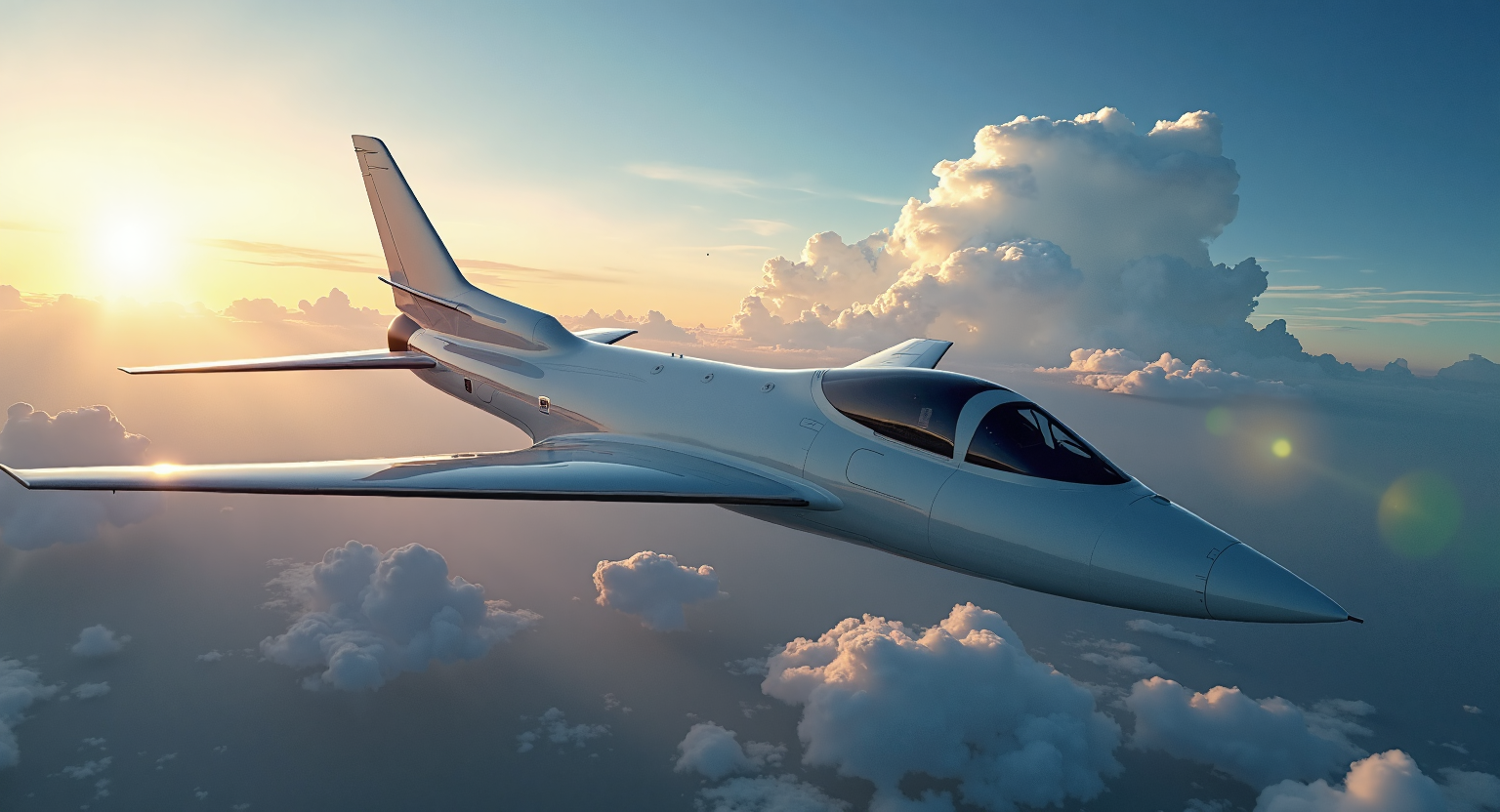
Hypersonic Travel: A New Era of Flight
Hypersonic travel, often defined as flight exceeding Mach 5 (five times the speed of sound), represents a paradigm shift in air and space transportation, promising to shrink travel times drastically and redefine accessibility. This advancement signifies not merely incremental progress but a transformative leap, akin to the transition from propellers to jet engines. Imagine traversing the vast expanse between New York and London in a mere hour, a feat currently relegated to science fiction but potentially within reach through hypersonic technology. This article delves into the intricacies of this cutting-edge technology, exploring its potential to revolutionize travel, access space, and reshape the future of aviation. From the engineering marvels of scramjet propulsion to the material science breakthroughs enabling sustained flight at extreme temperatures, hypersonic travel presents a convergence of scientific disciplines pushing the boundaries of what is possible. The implications extend far beyond rapid transit, encompassing potential advancements in space exploration, national defense, and global commerce. Consider the ability to deploy satellites rapidly and cost-effectively or to respond to global emergencies with unprecedented speed. These possibilities underscore the transformative potential of hypersonic travel. However, this technological frontier is not without its challenges. Developing hypersonic aircraft requires overcoming significant hurdles in propulsion, material science, and thermal management. The intense heat generated at hypersonic speeds necessitates materials capable of withstanding extreme temperatures without compromising structural integrity. Furthermore, the sonic booms produced by these aircraft present environmental and regulatory considerations that must be addressed. The economic implications of hypersonic travel are equally profound. The potential to drastically reduce travel times could revolutionize global commerce, enabling faster delivery of goods and services, facilitating international collaborations, and opening up new avenues for economic growth. Furthermore, the development and deployment of hypersonic technology will stimulate innovation across multiple sectors, creating new jobs and driving technological advancements in related fields. As we explore the future of transportation, hypersonic travel emerges as a pivotal area of focus, promising to redefine not only how we travel but also how we connect with the world around us.
Propulsion Systems and Material Science
Hypersonic travel, exceeding five times the speed of sound (Mach 5), hinges on revolutionary propulsion systems, notably scramjets. Unlike conventional jet engines that decelerate incoming air to subsonic speeds for combustion, scramjets operate by maintaining supersonic airflow throughout the engine. This ingenious mechanism allows for sustained hypersonic velocities, opening doors to drastically reduced travel times and expanded access to space. The core principle of a scramjet involves compressing incoming supersonic air through its unique inlet design. This compressed air then mixes with fuel and ignites, generating thrust. The high-speed exhaust exiting the nozzle propels the aircraft forward at hypersonic speeds. This process presents significant engineering challenges, especially concerning efficient fuel-air mixing and maintaining stable combustion at such extreme conditions. Developing materials capable of withstanding the intense aerothermal heating at hypersonic speeds is another critical aspect.
Temperatures can reach thousands of degrees Celsius, requiring advanced materials with exceptional heat resistance and structural integrity. Current research explores the use of high-temperature alloys, ceramic matrix composites (CMCs), and innovative cooling techniques to address these thermal challenges. The evolution of propulsion systems from ramjets to scramjets marks a significant leap in aerospace technology. Ramjets, while efficient at supersonic speeds, cannot operate at hypersonic velocities due to the deceleration of airflow within the engine. Scramjets, with their supersonic combustion process, overcome this limitation, paving the way for hypersonic commercial flight. The transition from ramjet to scramjet operation often involves complex combined-cycle engines that switch modes depending on the aircraft’s speed. The development of efficient and reliable combined-cycle engines represents a major research focus in hypersonic propulsion.
Hypersonic travel holds immense potential for transforming the future of transportation. Imagine traveling from New York to London in under two hours or reaching low Earth orbit significantly faster and more efficiently. This technology promises to revolutionize air travel, enable rapid point-to-point global transport, and open new frontiers in space exploration and commercial space ventures. However, realizing the full potential of hypersonic travel requires overcoming substantial technical challenges. These include developing advanced thermal management systems to protect the aircraft structure from extreme heat, designing robust and efficient scramjet engines capable of sustained operation, and improving guidance and control systems for stable flight at hypersonic speeds. Furthermore, mitigating the environmental impact of sonic booms and emissions is crucial for the widespread adoption of this technology. Ongoing research and development efforts are tackling these challenges, driven by the pursuit of faster, more efficient, and sustainable high-speed flight. The advancements in material science, combined with innovations in engine design and control systems, are gradually turning the dream of hypersonic travel into a tangible reality. The collaborative efforts of government agencies, private companies, and research institutions are propelling this field forward, with significant investments in fundamental research, technological development, and flight testing. The future of hypersonic flight is bright, with continued progress promising a new era of high-speed travel and exploration.
Benefits and Economic Impacts
Picture this: You’re in New York one moment, and Tokyo the next—all in a mere two hours. That’s the promise of hypersonic travel, a game-changer that could shrink our world in ways we’re only just beginning to imagine. Sure, we’ve heard about supersonic jets, but hypersonic? That’s next-level stuff. We’re talking speeds exceeding Mach 5—five times the speed of sound. And the tech making this possible? Scramjets. These aren’t your average engines; they’re the kind of advanced propulsion systems that could make London to Sydney a quick four-hour hop. Imagine the possibilities for business travelers. No more lost days in transit; suddenly, international meetings are a same-day affair. Global commerce? It just got a serious boost. But here’s where it gets really interesting: hypersonic travel isn’t just about shaving hours off your commute. Think about emergency response. Disaster relief efforts could be revolutionized—imagine critical supplies and personnel reaching affected regions within hours, not days. That’s a lifesaver in the making. Of course, this isn’t all smooth sailing. Hypersonic flight comes with some serious challenges. We’re talking extreme temperatures and pressures that push current materials to their limits. Enter advanced carbon composites and ceramic matrix composites—these aren’t just fancy names; they’re the unsung heroes ensuring structural integrity and passenger safety. The economic ripple effects are hard to ignore. New industries, new jobs, new markets—hypersonic travel is set to stimulate growth in ways we’re still uncovering. And let’s not forget the aviation industry itself. Business models will be challenged, opportunities will emerge, and companies in aircraft design, manufacturing, and operation will need to adapt or risk being left behind. But the implications stretch far beyond commercial air travel. Space travel, for instance, could become more efficient and affordable. Hypersonic aircraft could serve as reusable spaceplanes, taking off and landing like conventional aircraft while reaching orbital velocities. The cost of accessing space could plummet, opening doors to space tourism, scientific research, and satellite deployment. And the data—oh, the data! Rapid satellite deployment could enhance communication networks and provide more timely, accurate Earth observation. As hypersonic travel transitions from futuristic concept to reality, we’ll need new regulatory frameworks and safety protocols. International cooperation will be key, addressing air traffic management, sonic booms, and environmental impacts. And let’s not overlook the defense implications. Rapid deployment of personnel and equipment could reshape military strategies. As research and development accelerate, hypersonic flight is set to transform not just how we travel, but how we interact with the world around us. Advanced monitoring systems could play a crucial role in ensuring the safety and efficiency of these high-speed journeys, providing real-time data and insights to both passengers and operators.
Challenges and Concerns
While the potential of hypersonic travel is immense, several formidable challenges must be overcome before widespread adoption becomes a reality. These hurdles span multiple disciplines, from fundamental physics to complex engineering and regulatory considerations. The technical challenges are particularly acute, beginning with the need for robust and reliable propulsion systems capable of sustained operation at Mach 5 and beyond.
Scramjet technology, while promising, requires further refinement to achieve consistent performance across varying atmospheric conditions and flight profiles. The extreme temperatures and pressures encountered during hypersonic flight demand materials with unprecedented thermal resistance and structural integrity, pushing the boundaries of current aerospace engineering. These advanced materials must also be lightweight to maintain the efficiency of hypersonic aircraft, creating a complex trade-off between performance and durability. wireless energy solutions could play a role in future propulsion systems by reducing the weight of onboard power storage, though hypersonic flight presents unique challenges even for such innovations.
Beyond the technical aspects, environmental concerns also present significant hurdles.
Current Research and Development
The relentless pursuit of hypersonic travel is driving remarkable advancements in aerospace research and development. Government agencies, private companies, and research institutions worldwide are investing heavily in this transformative technology, each contributing unique expertise and resources. NASA’s Hypersonic Technology Project is exploring advanced concepts like the X-59 Quiet Supersonic Technology aircraft, aiming to mitigate the disruptive sonic booms associated with high-speed flight. Similarly, the Defense Advanced Research Projects Agency (DARPA) is spearheading projects like the Hypersonic Air-breathing Weapon Concept (HAWC), demonstrating the potential for air-launched hypersonic cruise missiles. These initiatives showcase the dual-use nature of hypersonic technology, with applications spanning both commercial transportation and national defense. neuromorphic computing breakthroughs are also playing a critical role in optimizing the complex simulations required for hypersonic vehicle design, enabling more efficient aerodynamic testing and material analysis.
Private companies such as SpaceX, Boeing, and Lockheed Martin are also making significant strides in developing hypersonic aircraft and propulsion systems. SpaceX’s Starship, designed for rapid intercontinental travel and space exploration, leverages its powerful Raptor engines to achieve hypersonic speeds. Boeing’s X-51 Waverider program successfully demonstrated sustained hypersonic flight using a scramjet engine, paving the way for future hypersonic cruise vehicles. Lockheed Martin’s efforts focus on developing hypersonic missiles and aircraft for military applications, demonstrating the strategic importance of this technology.
Beyond the major players, numerous research institutions are contributing to the advancement of hypersonic technology. Universities and national labs are conducting fundamental research in areas like aerodynamics, material science, and propulsion systems, providing the scientific foundation for future breakthroughs. These research efforts are exploring novel materials capable of withstanding the extreme temperatures and pressures encountered during hypersonic flight, as well as innovative cooling techniques to protect sensitive components. The development of advanced computational fluid dynamics (CFD) tools is also crucial for simulating hypersonic flow and optimizing vehicle designs.
The future trajectory of hypersonic travel hinges on overcoming several key technological challenges. Developing reliable and efficient scramjet engines is paramount, as these air-breathing engines are essential for sustained hypersonic flight. Material science breakthroughs are needed to create lightweight, heat-resistant materials that can withstand the extreme temperatures generated at Mach 5 and beyond. Furthermore, advancements in thermal management systems are crucial for protecting sensitive onboard electronics and ensuring passenger safety. Addressing these challenges will require sustained investment in research and development, as well as fostering collaboration between government agencies, private companies, and research institutions. The convergence of these efforts promises to unlock the full potential of hypersonic travel, revolutionizing global transportation and access to space.
The Future of Hypersonic Travel
Hypersonic travel stands poised to revolutionize transportation as we know it, shrinking travel times and potentially reshaping global connectivity. While significant challenges remain, rapid advancements in propulsion systems, materials science, and regulatory frameworks suggest a future where hypersonic flight becomes a commonplace reality. This evolution in air travel will not only impact commercial transportation but also hold significant implications for space exploration, national defense, and global commerce. The development of robust scramjet engines, capable of sustained hypersonic speeds, represents a cornerstone of this progress. Unlike traditional jet engines, scramjets utilize the supersonic airflow itself for combustion, achieving unprecedented levels of efficiency at Mach 5 and beyond. Overcoming the technical hurdles related to scramjet stability and thermal management is paving the way for the next generation of hypersonic aircraft. The extreme temperatures generated by hypersonic flight necessitate advanced materials capable of withstanding immense heat and pressure.
Innovations in material science, including the development of advanced ceramics and high-temperature composites, are critical to ensuring the structural integrity and safety of hypersonic vehicles. These advancements are pushing the boundaries of aerospace engineering and enabling the design of aircraft capable of enduring the harsh conditions of hypersonic flight. Beyond the technological advancements, establishing comprehensive regulatory frameworks is essential for the safe and responsible integration of hypersonic travel into the existing aviation infrastructure. Addressing concerns related to sonic booms, environmental impact, and airspace management requires international cooperation and the development of new air traffic control protocols. The potential economic impact of hypersonic travel is substantial, promising to unlock new markets and accelerate global trade.
The ability to connect distant cities in a matter of hours will transform business travel, logistics, and supply chains. Further, hypersonic technology promises to revolutionize access to space, dramatically reducing the cost and time associated with launching payloads and potentially enabling new forms of space tourism. The convergence of technological breakthroughs and evolving regulatory frameworks indicates that hypersonic flight is no longer a distant dream, but a rapidly approaching reality.
The ongoing investment in research and development by government agencies like NASA and private companies such as SpaceX and Hermeus signifies the growing momentum in this field. As hypersonic aircraft transition from experimental prototypes to commercially viable vehicles, we can anticipate a paradigm shift in how we perceive and experience global travel, with hypersonic technology shaping the future of transportation and connecting the world in unprecedented ways.